





Basics Of Computer Programming
Published 10/2024
MP4 | Video: h264, 1280x720 | Audio: AAC, 44.1 KHz
Language: English | Size: 615.14 MB | Duration: 3h 0m
Unleash your creativity
What you'll learn
You will learn how a processor is built and how it works
You will lay a solid foundation on which to build your career as a programmer
You will easily adapt to the dynamic changes taking place in the world of IT
You will avoid many mistakes made by novice programmers
Requirements
No programming experience is required. All you need is an open mind to absorb knowledge.
Description
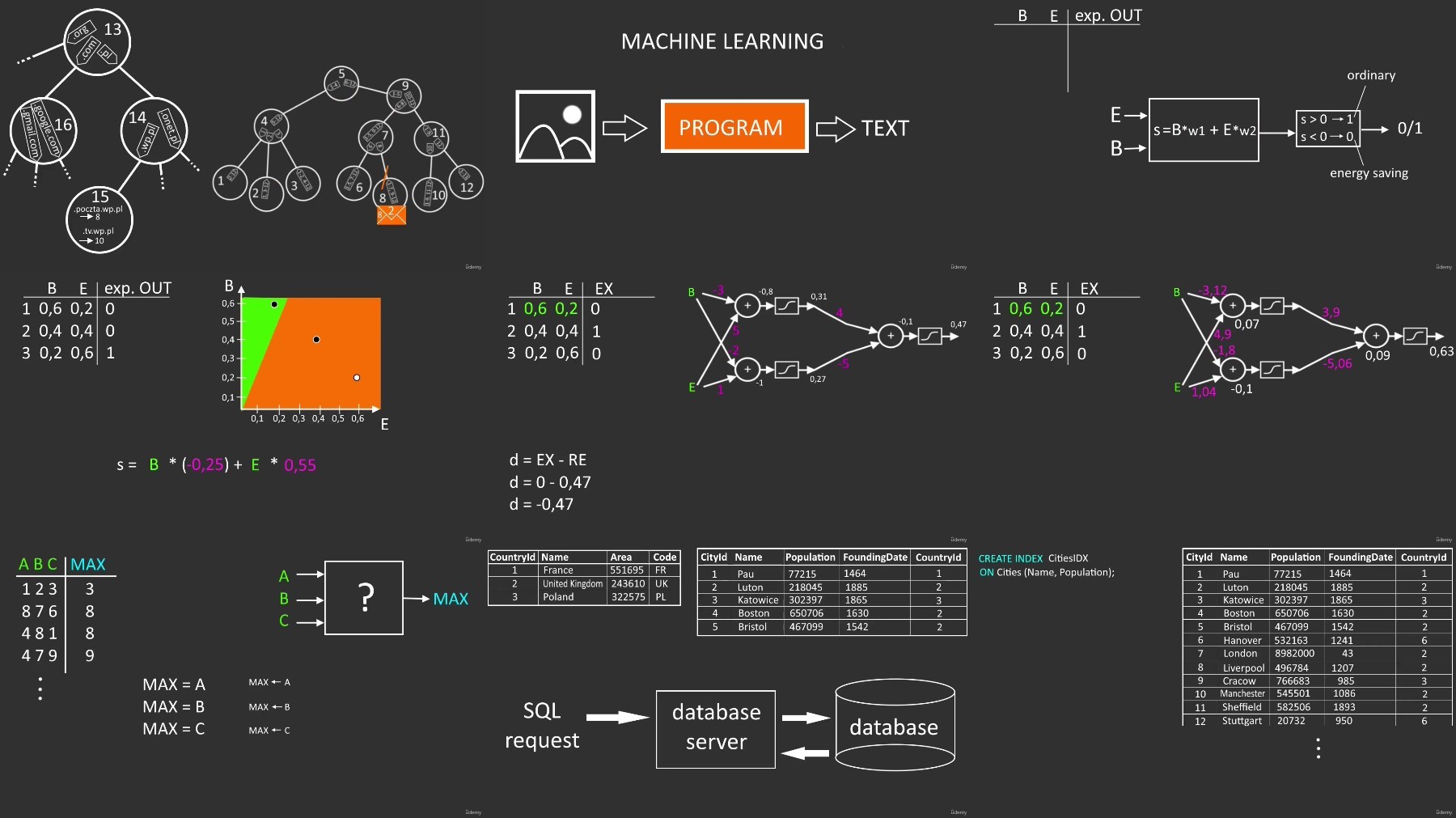
One of the basics of programming is a general knowledge of how a processor is built and works, which is why most of the course is devoted to this. Together we build our own processor and learn how to program it. In the further part of the course we will find general information and tips on programming. The last lecture, on the other hand, is devoted to a discussion of several topics in the field of computer science, such as the Internet and artificial intelligence. The material presented in the course is a foundation on which you can base yourself during further learning of programming. Through numerous animations, examples and analogies, I present ideas from the world of programming so that they are as simple to understand as possible.In the first lecture I explain why the basics are important. In the second I answer the questions about what computer science is, what information is, and what information processing is. In the third I explain the operation of a transistor and a NOT gate. In the following lectures up to 11 I build and program a processor explaining how OR gates, AND gates, logic functions and blocks, flip-flops, registers, memory, control circuitry and the arithmetic logic unit work. Chapter 12 is devoted to programming in high-level languages. I discuss the basic issues related to object-oriented programming. Chapter 13 contains numerous tips on programming. Among other things, I mention the Pomodoro technique. The aim of the last chapter is to show a few simple ideas related to the Internet, database indexes, and artificial intelligence.
Overview
Section 1: Basics of computer programming
Lecture 1 Introduction
Lecture 2 Logical Operations
Lecture 3 Transistor and NOT Gate
Lecture 4 OR and AND Gates
Lecture 5 Logic Function and Block
Lecture 6 Flip-Flop and Register
Lecture 7 Memory
Lecture 8 Processor
Lecture 9 Jump Instructions
Lecture 10 Subroutine
Lecture 11 Input-Output Systems
Lecture 12 High-Level Language
Lecture 13 Good Practices
Lecture 14 Selected Topics
For those who want to start programming or those who already program but feel they lack the basics. For people who want to understand programmers.
DDownload
RapidGator
FileStore
TurboBit
FileAxa
Feel free to post your Basics Of Computer Programming Free Download, torrent, subtitles, free download, quality, NFO, Dangerous Basics Of Computer Programming Torrent Download, free premium downloads movie, game, mp3 download, crack, serial, keygen.